
1955 – 1975
From the Traction to the DS 23: the story of the Citroën DS and ID, from their beginnings in the design office to the last car off the line.
Immerse yourself in the world of this classic car and share IDS Classic Parts' passion for these classic Citroëns.
01
The origins
In 1934, Citroën's chronic debt and the technical setbacks of the first Tractions led to the takeover of the brand by Michelin.
Under the chairmanship of Pierre-Jules Boulanger, restructuring was the priority. Wanting a mass-market car, the design office imagined a lighter, more aerodynamic Traction.
In 1936-1937, work focused on two projects: the TPV, "très petite voiture" (very small car), which would become the 2 CV and whose pre-series was planned for the 1939 Motor Show, which never took place; and the VGD, "voiture de grande diffusion" (mass-market car), meant to succeed the ageing Traction, more aerodynamic and with a transverse engine.
There was not yet any talk of a DS or of a revolution.
02
The creation of the DS
The tragic succession of Pierre-Jules Boulanger by Robert Puiseux, in 1950, would accelerate the coming to light of the innovative ideas that the design office had never stopped exploring.
The VGD was eagerly awaited: time was running out to replace the Traction, and development of the flat-six engine was not coming to fruition. The old recycled 1911 cc engine struggled to live up to the ambitions and fitted poorly under the bonnet. Pushed back into the cabin, it would leave the DS, throughout its career, with a fourth spark plug that was hard to reach.
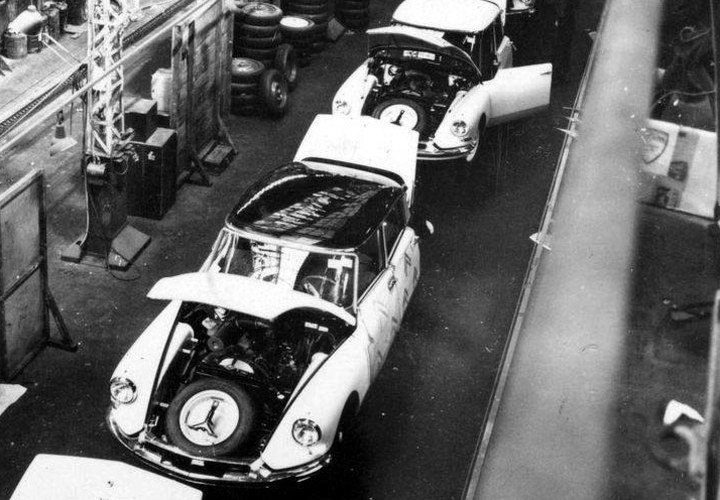
The coming revolution would be hydraulics.
It was the work and passion of Paul Magès, in charge of inspection and testing at Citroën. The development of the TUB's braking paved the way and sped up the work that led to the first 15 H and then, beyond the suspension, to the entire hydraulic control system of the 1955 DS.
To make up for the weaknesses of the engine, André Lefebvre focused on weight saving and aerodynamics. Aluminium bonnet, single-spoke steering wheel, synthetic roof: so many innovations in the bodywork and the interior equipment that contributed to the 1955 design.
The design was the work of Flaminio Bertoni, who had already created the Traction and the 2 CV. He sculpted as much as he drew, combining coachwork and fine art. Sketches followed one another from 1950, with a brief calling for a low centre of gravity and aerodynamics unknown on a mass-produced car.
A year before the official launch, the sloping rear no longer found favour with management, as there was not enough room for rear passengers. Bertoni then imagined a break in the roofline, marked by the raised indicator trumpets, which would become the signature of the DS.
03
Success
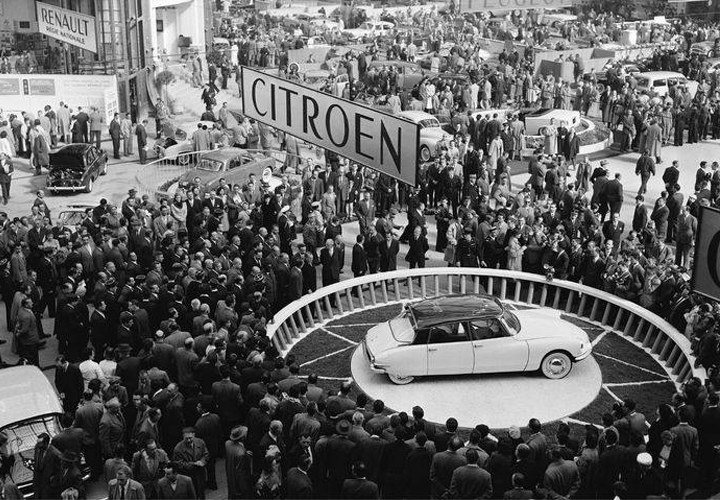
Unveiled at the 1955 Paris Motor Show, after being tracked down by L’Auto-Journal, the DS 19 saw orders pour in: nearly 1,000 within an hour of the show opening, 12,000 by the end of the day, 80,000 by the end of the show.
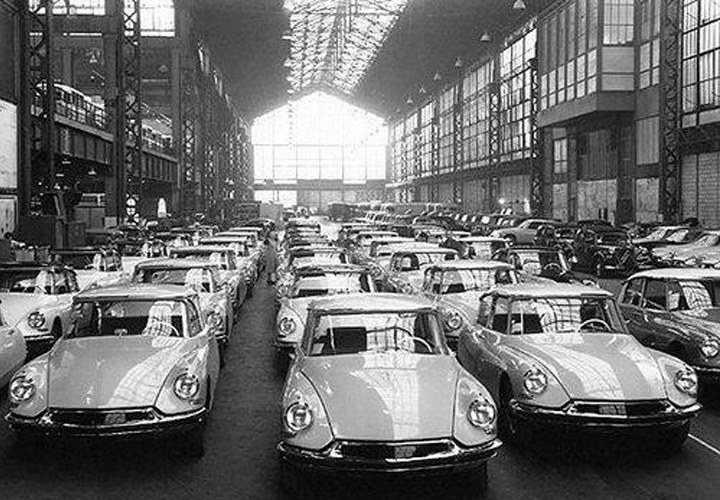
The first buyers had to be patient and put up with the breakdowns of a car that was not yet fully sorted. All was forgiven, because when everything worked, it was admirable: exceptional roadholding, powerful brakes.
This technological lead could be disconcerting. In October 1956, Citroën launched the ID 19 to reassure customers who were not yet ready: cheaper than the DS, it was an excellent transition for Traction owners.
04
The evolution of the DS and ID, from 1955 to 1975
The main lines of the models' evolution, to estimate the model year of the cars you come across. For greater accuracy, especially given the complexity of the commercial and technical names, refer to specialist books, in particular the one by Olivier de Serres.
1955Motor Show year
DS
- 1911 cc engine, as on the Traction
- Modernised cylinder head and gearbox derived from the Traction, with hydraulically operated selector forks
ID
- Does not exist yet
1956Dec. 1955 – Oct. 1956
DS
- April 1956Fast idle device
- July 1956Twin-groove high-pressure pump
- Oct. 1956Lock on the front left door
ID
- ID 19 Luxe and ID 19 Normale shown at the Motor Show, but not produced
1957Oct. 1956 – Oct. 1957
RangeDS 19 – ID 19 Normale – ID 19 Confort – ID 19 Luxe
DS
- May 1957Undertray: aluminium replaced by steel
- June 1956Plexiglas rear window
ID
- May 1957Start of production
- Unassisted brakes, no power steering
- No door armrests
- Plain hubcap on the wheels
- Painted headlamp surrounds
- Painted centre pillars and rear quarter panels
- Round rear wing reflector
- Centre-exit exhaust
- May 1957Undertray: aluminium replaced by steel
- June 1956Plexiglas rear window
1958Oct. 1957 – Sept. 1958
RangeDS 19 – ID 19 Normale – ID 19 Confort – ID 19 Luxe – ID 19 P Confort
DS
- Feb. 1958Twin exhaust on the left
- June 1958Steering wheel wrapped in tape instead of cord
- Sept. 1958Twin-jet windscreen washer
ID
- Chrome headlamp surrounds
- Aluminium wheel trims
1959Oct. 1958 – Sept. 1959
RangeDS 19 – DS 19 Prestige – ID 19 Normale – ID 19 Confort – ID 19 Luxe – ID 19 Voiture de maître
ID 19 Break – Commerciale – Ambulance
DS
- May 1960Jaeger electric clock
- JulyBlack steering wheels, single-coil ignition
- Aug. 1960Lengthened rear wings, recessed reflector
ID
- Same lengthened wings as on the DS
- End of the ID Normale with the 11 D engine
1960Oct. 1959 – Sept. 1960
RangeDS 19 – DS 19 Prestige – ID 19 Confort – ID 19 Luxe – ID 19 convertible
Break (ID 19 F) – Familiale – Commerciale – Ambulance
DS
- Sept. 1959"Ashtray" wings
- Oct. 1959Stainless steel door handles
- May 1960Steel exhaust
- Low-pressure pump replaced by a centrifugal governor
- Switch to 12 volts
- Pre-expansion silencer dropped
ID
- Rear quarter panel trimmed in embossed aluminium
- Pre-expansion silencer dropped
1961Sept. 1960 – Aug. 1961
RangeDS 19 – DS 19 Prestige – DS 19 factory convertible – ID 19 Normale – ID 19 Confort – ID 19 Luxe – ID 19 factory convertible
Break (ID 19 F) – Familiale – Commerciale – Ambulance – Voiture de maître
DS
- Feb. 1961Fast idle on the carburettor
- 15 Feb. 1961Chapron convertible
- Mar. 196183 hp engine with damper, domed pistons, twin-choke carburettor
- May 1961Stainless steel "ashtray" grilles
ID
- Switch to 12 volts
- Dashboard with standardised knobs
- Indicator control on the left
- Boot handle
1962Sept. 1961 – Aug. 1962
RangeDS 19 – DS 19 Prestige – DS 19 factory convertible – ID 19 Confort – ID 19 Luxe – ID 19 factory convertible
Break (ID 19 F) – Familiale – Commerciale – Ambulance
DS
- Aug. 1961New black moulded dashboard
- Mar. 1962New rocker cover with moulded filler
- Side lights on the centre pillar dropped
ID
- Sept. 1961Power brakes
- Flat accelerator pedal, as on the DS
- Low-pressure warning light on the dashboard
- Automatic ignition advance
- Jan. 1962Side lights dropped, as on the DS
- May 1962New rocker cover, as on the DS
Second front end
1963Sept. 1962 – Aug. 1963
RangeDS 19 – DS 19 Prestige – DS 19 MA – DS 19 factory convertible – ID 19 Confort – ID 19 Luxe – ID 19 factory convertible
Break (ID 19 F) – Familiale – Commerciale – Ambulance – Chapron convertible
DS
- New nose, air intake under the headlamps
- Valance flush with the bumper
- Rubber overrider on the rear bumper
- Jan. 1963Optional manual gearbox with synchronised 1st gear
- Wheels without slots
ID
- Optional power steering, with 7-piston pump
1964Sept. 1963 – Aug. 1964
RangeSame range as 1963
DS
- No major changes
ID
- No major changes
1965Sept. 1964 – Aug. 1965
RangeDS 19 – DS 19 Prestige – DS 19 Pallas – DS 19 MA – DS 19 factory convertible – ID 19 Confort – ID 19 Luxe – ID 19 factory convertible
Break (ID 19 F) – Familiale – Commerciale – Ambulance – Chapron convertible
DS
- Aug. 1964Launch of the Pallas trim: large wheel trims, chrome indicator surrounds, additional long-range lamps, orange stop lights, stainless steel and rubber body side mouldings, DS badge on unribbed rear quarter panels, stainless steel strips at the top and bottom of the doors, higher front seat backs, door panels trimmed to the top, carpet on the side members, chrome-plated sills
- Dec. 1964Water temperature gauge on the dashboard
- Mar. 1965Gear positions marked on the selector surround
ID
- Sept. 1964New dashboard
- 75 hp engine with damper
- Parallel wipers
1966Sept. 1965 – Aug. 1966
RangeDS 19 A – DS 19 A (D) – DS 19 MA (DL) – DS 21 (DX) – DS 21 M (DJ) – Pallas Prestige – DS 21 convertible – Chapron convertible
ID 19 A – ID 19 B (DV) – ID 19 Luxe – ID 19 Confort – ID 21 – ID 19 A (DE) – ID 19 F (DLF) – Break ID 19 F (DEF) – ID 21 F (DJF)
DS
- Model namesDS 19 A hydraulic and DS 19 M manual: 11 CV, 1985 cc, 5 bearings, 90 hp
- DS 21 hydraulic and DS 21 M manual: 12 CV, 2175 cc, 5 bearings, 109 hp
- New suspension arms, new links
- Constant-velocity transmission with tripod joints
- New brake calipers
- XAS tyres 180 × 380 at the front, 155 × 380 at the rear
- New undertray
ID
- ID 19 saloon 81 hp (DE)
- ID 19 Break and Familiale (DLF)
- ID 21 Familiale and Break 109 hp (DJF)
- Model namesID 19 A saloon, formerly DS: 1911 cc, 3 bearings, 81 hp
- ID 19 F: 1985 cc, 5 bearings, 90 hp
- ID 21 F: 2175 cc, 5 bearings, 109 hp
1967Sept. 1966 – Aug. 1967
RangeDS 19 A – DS 19 MA (DL) – DS 21 (DX) – DS 21 M (DJ) – Pallas Prestige – DS 21 convertible
ID 19 B – ID 21 – ID 19 A (DE) – ID 19 F (DLF) – Break ID 19 F (DEF) – ID 21 F (DJF) – ID 19 FA Familiale – Chapron convertible
DS
- Switch to green LHM
- Battery at the front right
ID
- ID 19 B: 1985 cc, 5 bearings, 84 hp
- Switch to green LHM
Third front end
1968Sept. 1967 – Sept. 1968
RangeDS 19 A (DY) – DS 19 MA (DL) – DS 21 (DX) – DS 21 M (DJ) – Pallas Prestige – DS 21 convertible
ID 19 B – ID 21 – ID 19 MA – ID 19 FA (DLF) – ID 19 FH – ID 21 F (DJF) – ID 21 FH – ID 19 FA Familiale – convertible
DS
- New front end with faired-in headlamps, narrower bonnet
- New front bumper
- New raised indicators
- The alternator replaces the dynamo
ID
- Same changes as on the DS
1969Sept. 1968 – Aug. 1969
RangeDS 19 A – DS 19 MA – DS 20 (DY) – DS 20 M (DL) – DS 21 (DX) – DS 21 M (DJ) – Pallas Prestige – DS 21 convertible
ID 19 B – ID 21 – ID 19 MA – ID 19 FA (DLF) – ID 19 FH – ID 20 – ID 20 F – ID 20 FH – Break ID 19 F (DEF) – ID 21 F (DJF) – ID 19 FA Familiale – convertible
DS
- DS 20, 1985 cc, replacing the DS 19
- New seats, new dashboard
ID
- ID 20, 1985 cc
- New seats, new dashboard
7 October 1969: the millionth DS
1970Sept. 1969 – Aug. 1970
RangeDS 20 – DS 20 M – DS 21 – DS 21 M – DS 21 IE – DS 21 M IE – Pallas Prestige – DS 21 convertible – DS 21 IE convertible
ID 19 D Spécial – ID 20 D Super – ID 20 FH – ID 21 F – ID 21 FH
DS
- New DS 21 model with electronic fuel injection, 139 hp
- New 3-dial dashboard
ID
- Model namesThe ID 19 becomes the D Spécial, the ID 20 becomes the D Super
- New 3-dial dashboard
1971Aug. 1970 – Aug. 1971
RangeDS 20 – DS 21 – DS 21 M – DS 21 IE – DS 21 M IE – DS 21 Borg Warner – Pallas Prestige – DS 21 convertible – DS 21 IE convertible
DS 20 and DS 21 Break, Familiale, Commerciale
ID 19 D Spécial – ID 20 D Super – ID 20 F – ID 21 F
DS
- 5-speed gearbox on all manual DS models
ID
- Optional 5-speed gearbox on the D Super
1972Aug. 1971 – Aug. 1972
RangeDS 20 – DS 21 – DS 21 M – DS 21 IE – DS 21 M IE – Pallas Prestige
DS 20 and DS 21 Break, Familiale, Commerciale
ID 19 D Spécial – ID 20 D Super – ID 20 F – ID 21 F
DS
- Flush exterior door handles
- Reversing lights under the rear bumper
- Foam steering wheel
- Optional air conditioning on the DS 21, with special bumper
- Nov. 1971Borg Warner automatic gearbox
ID
- Flush exterior door handles
- No reversing lights on the D Spécial
- New door panel design
- Optional power steering on the D Spécial and D Super
- 5-speed gearbox on the D Super
- New brake control
1973Aug. 1972 – Aug. 1973
RangeDS 20 – DS 23 – DS 23 M – DS 23 FF – DS 23 IE – DS 23 M IE – D Super 5 – Pallas Prestige – DS 23 Break
DS 20 Break, Familiale, Commerciale – ID 19 D Spécial – ID 20 D Super – ID 20 FF
DS
- New DS 23 model with electronic fuel injection, replacing the DS 21
ID
- New D Super 5 model: DS 21 engine (2175 cc) and 5-speed gearbox
- New D Spécial and D Super badges
- Power steering as standard on the D Super
1974Aug. 1973 – Aug. 1974
RangeDS 20 – DS 23 – DS 23 F – DS 23 IE – D Super 5 – Pallas Prestige – DS 23 Break
DS
- The Pallas badge replaces the DS badge on the rear quarter panel
1975: the last DS built is a Delta blue DS Pallas IE, number 1,330,775.
Restoring and maintaining your DS
The parts to keep your ID or DS on the road
IDS Classic Parts supports enthusiasts: personal advice and spare parts for the maintenance, restoration and repair of the Citroën DS and ID.